Tips in Use 重點解析
/ You Can Do This 英文試金石
/ 中文翻譯
生活快遞|精彩教學影片(講解老師:Bernice & Alice 老師)
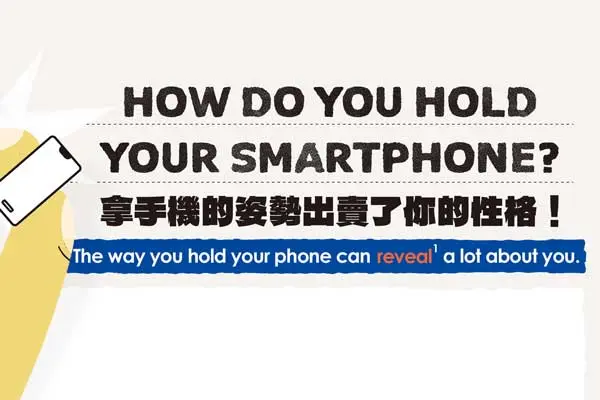
The way you hold your phone can reveal a lot about you.
With so many people using smartphones these days, researchers have noticed some trends. When you make a call or scroll, how do you hold your phone? Do you hold it with one hand or two? Which finger usually touches the screen? Some psychologists believe the way you hold your device may say a lot about your personality.
Let’s take a look at the four most common ways people hold their phone. The first is the “single-hand” user. In this position, people hold the phone in their dominant hand and use their thumb to tap the screen. People who fit in this type are often practical and confident, but they may also be risk- takers. With one hand free, this grip reflects a laid-back attitude. However, they may also act too quickly and make more mistakes.
Then there are those who hold their phone with two hands and use both thumbs to type and navigate the screen. This is the “two thumbs” position. People who use two thumbs to tap the screen are usually focused and hard-working. They like to solve problems quickly and don’t like to waste time. Despite their efficiency, others may view these people as pushy or too serious.
Business leaders have to keep track of the latest economic trends.
企業領袖必須隨時掌握最新的經濟趨勢。
Reading newspapers and watching TV enable you to keep up with the trends.
看報及看電視可以讓你趕上潮流。
The phrase “silent walking” suddenly began to trend after influencers shared their personal experiences.
「silent walking」這個詞在網紅分享自身經驗後突然開始流行起來。
This tap water is not potable; it's polluted.
不能飲用這自來水;它被汙染了。
I tapped John on the shoulder to get his attention.
我輕拍約翰的肩膀,想引起他的注意。
Paul tapped on the window of the room to wake up his brother.
保羅輕敲房間的窗戶,要叫醒他弟弟。
The mirror reflects sunlight.
鏡子會反射陽光。
The polls have reflected that welfare is the top issue with voters.
這些民調反應出福利制度才是選民關注的首要議題。
We took a moment to reflect on what we were about to do.
我們花了片刻時間思考我們要怎麼做。
People's actions often reflect their inner thoughts.
人們的行動往往反映出他們內心的想法。
In my view, this policy is impractical..
依我之見,這政策並不切實際。
From my point of view, this policy is impractical.
依我之見,這政策並不切實際。
From my viewpoint, this policy is impractical.
依我之見,這政策並不切實際。
That room has great views over the sea.
那房間的視野很棒,可以俯瞰海景。
In view of Kyle’s great performance, the manager decided to give him a raise.
因為凱爾優異的表現,經理決定給他加薪。
I always view Thanksgiving as a time for family togetherness.
我一向視感恩節為家人親近的時刻。
A large number of tourists come to view this famous statue every day.
每天都有大量的遊客來參觀這座著名的雕像。
Chinese scroll paintings are one of the most distinct art forms in Chinese culture.
中國的捲軸畫是中華文化中最有特色的藝術創作形式之一。
Scroll to the bottom of the page to check the reviews.
滾動到頁面的底部,可以查看評論。
The light breeze scrolled back the layer of sand on the beach table.
微風捲回了沙灘桌上的一層沙。
Nancy gripped my hand unconsciously when we were watching the horror movie.
我們看恐怖片的時候南希不由自主地抓緊我的手。
The novel failed to grip Brian’s attention; in fact, he found it a bit boring.
這本小說沒有吸引到布萊恩,事實上,他覺得這本小說有點無聊。
The girl escaped when the kidnapper loosened his grip.
那女孩趁綁架犯手一鬆的時候逃走了。
I just couldn’t get a grip on what Gary said.
我真是搞不懂蓋瑞在講什麼。
The captain navigated his ship through the rough
waters during the storm.
船長引領船隻駛過暴風雨中驚濤駭浪的海域。
The equipment is used to help sailors navigate,
especially during foggy conditions when it is difficult
to see.
這設備是用來協助船員確定航行方向的,特別是在有霧的時
候,此時視線並不佳。
Clear signage helps visitors navigate public spaces more easily.
清楚的標示能幫助訪客更容易在公共空間中行動。
The delivery robot can navigate narrow hallways.
這臺送貨機器人能在狹窄的走廊上四處行動。
The delivery robot can navigate narrow hallways.
這臺送貨機器人能在狹窄的走廊上四處行動。
I always view Thanksgiving as a time for family togetherness.
我一向視感恩節為家人親近的時刻。
Mark tends to view every challenge as an opportunity.
馬克傾向於將每個挑戰視為機會。
Henry sees the rain as a good reason to stay inside and read.
亨利認為下雨剛好可以待在室內閱讀。
♦「with + 受詞 + 受詞補語」的用法
此句型為使用 with 引導情狀介詞片語的用法,用來補 充說明句中主詞所處的情形或附帶狀況。主要動作以動 詞表示,次要動作則以情狀介詞片語表示,可置於主要 子句之前或之後,句型有下列幾種:
1. with + 受詞 + 現在分詞(作受詞補語)
受詞與受詞補語的關係為主動(本文第一段第一句 即屬此用法)。
例:My grandmother fell asleep on the sofa with a blanket covering her lap.
我奶奶在沙發上睡著了,大腿上蓋著一條毯子。
2. with + 受詞 + 過去分詞(作受詞補語)
受詞與受詞補語的關係為被動。
例:With his work finished, Mike can leave anytime he wants.
因為麥克的工作做完了,他隨時可以離開。
3. with + 受詞 + 形容詞(作受詞補語)
形容詞用來補充說明受詞(本文第二段倒數第二句 即屬此用法)。
例:The students watched the movie with the teacher present.
這些學生看電影的同時有老師在場。
請依句意在空格內填入適當的字詞
1. The numbers in this graph
2. A special type of device
3. Tom broke the contract
A. is needed to look for the treasure.
B. so that we can solve this problem.
C. by revealing the company’s secrets.
D. reflect changes in people’s habits.
答案:1. D 2. A 3. C
你拿手機的方式可以透露出你的大小事。
隨著現代使用智慧型手機的人數眾多,研究人員注意到一些趨 勢。你打電話或滑手機時,你是怎麼拿手機的呢?你用單手還是雙手 拿?通常是哪隻手指觸碰螢幕?一些心理學家認為,你拿裝置的方式 可能透露出許多關於你的個性的事。
來看看四種最常見的人們拿手機的姿勢吧。第一種是「單手」的 使用者。用此姿勢時,人們會用慣用手拿手機,並用大拇指點擊螢 幕。符合此類型的人通常是既實際又自信的,但他們可能也勇於冒 險。因為一隻手空著,這種握東西的方式反映出輕鬆隨性的態度。然 而,他們可能也會因行動過於匆促而犯下更多錯誤。
接著是那些用雙手拿手機、兩手拇指打字或瀏覽螢幕的人。這是 「雙拇指」姿勢。使用兩手拇指點擊螢幕的人通常很專注也很勤奮。他 們喜歡迅速解決問題,不喜歡浪費時間。儘管他們做事效率高,其他
人可能會認為這些人很咄咄逼人或太過嚴肅。

恭喜答對獲得 熊贈點 1點
